


In a groundbreaking advancement for science and technology, researchers at Lawrence Berkeley National Laboratory (Berkeley Lab) have introduced an AI-driven “digital twin” system that’s set to transform chemical and materials research. Announced on February 17, 2026, this innovation integrates artificial intelligence directly into lab experiments, moving beyond traditional data analysis to real-time simulation and optimisation. As the world pushes for faster solutions in clean energy and sustainable materials, this development could slash research timelines and resource use, paving the way for quicker breakthroughs in fields like battery technology and carbon capture.
Understanding the Digital Twin in Scientific Research
A digital twin is essentially a virtual mirror of a physical system, commonly used in industries like manufacturing or aviation to predict and optimise performance. Additionally, in this scientific application, Berkeley Lab’s system creates a real-time virtual replica of chemical experiments. It collects live data from lab instruments, uses AI to simulate reactions, and dynamically adjusts parameters to guide the physical process.
This means researchers can test hundreds of scenarios virtually before committing to resource-intensive physical trials, reducing the classic trial-and-error approach that plagues chemical synthesis.
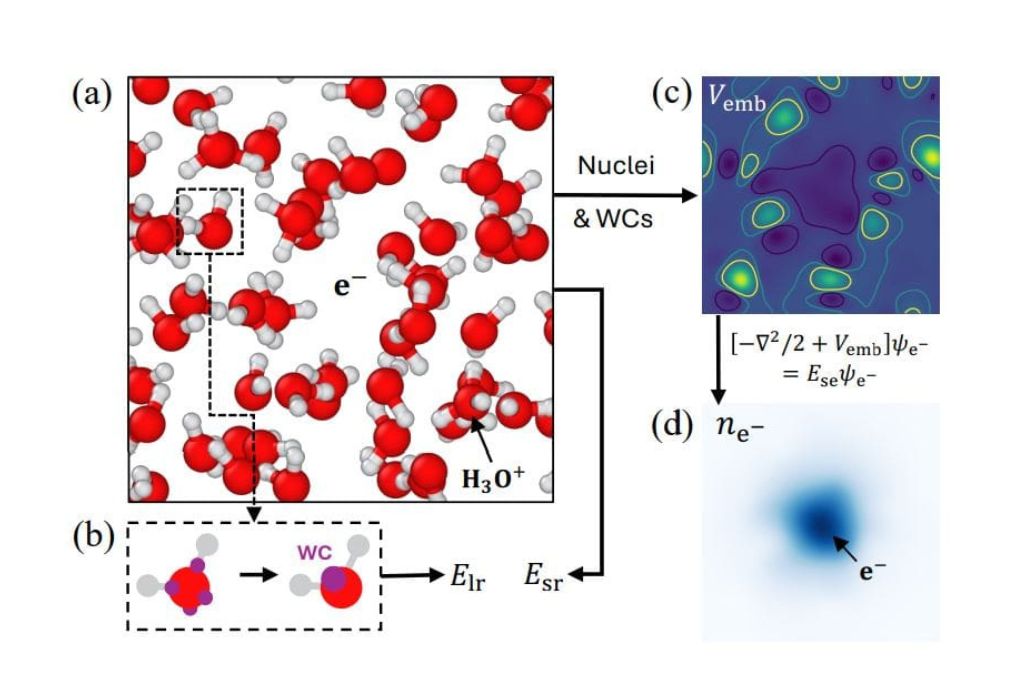
New AI-Powered Hybrid Simulation Reveals How Electrons Drive Chemical Reactions in Liquids, Computing Sciences.
Key features include:
- Continuous data collection from experiments
- AI predictive modelling for reaction outcomes
- Real-time adjustments to experimental conditions
- Minimised waste and faster iteration cycles
Why This Breakthrough Matters for Global Challenges
Traditional chemical research is often slow, costly, and resource-heavy, involving months of iterative testing. Also, the digital twin aims to change that by shortening timelines, cutting costs, and enhancing precision. Applications span critical areas such as:
- Advanced battery materials for renewable energy storage
- Catalysts for efficient hydrogen production
- Next-gen semiconductors for electronics
- Sustainable methods for chemical manufacturing
- Technologies to capture and store carbon emissions
Scientists highlight its potential in accelerating clean energy research, addressing urgent issues like climate change. Basically, focusing on materials design, it could help meet global sustainability goals more efficiently.
Accelerate Your Career-Lawrence Berkeley National Laboratory
How AI Powers the System
At the core is machine learning trained on vast datasets, including chemical reaction histories, molecular structures, and sensor data from labs. As experiments run, the AI compares virtual predictions with real results in a feedback loop, refining models and suggesting optimisations on the fly.
This ties into the emerging concept of “self-driving laboratories,” where AI, robotics, and automation handle much of the experimentation, allowing human scientists to focus on high-level innovation.

Four AI-driven robots make easy work of quantum dot synthesis
Balanced Views: Opportunities and Cautions
Supporters praise the system for speeding up vital research in climate and energy, reducing waste, and boosting innovation. It could enhance global competitiveness in tech.
However, sceptics warn that AI’s reliability depends on training data quality, and complex chemistry might still surprise models. Also, there’s concern about over-relying on automation, potentially diminishing human intuition, and issues like data security or widening gaps between funded and under-resourced labs.
Broader Context and Long-Term Impact
This fits into worldwide trends: surging AI investments in science, collaborations between computational and experimental experts, and national strategies for advanced materials. If scaled, it could reduce time-to-market for innovations, reshape education in lab sciences, and improve research reproducibility.
Globally, it underscores the fusion of AI with physical sciences, influencing how knowledge is generated amid international competition.